AI-NATIVE CREATION · PRODUCT DESIGN
More creative possibility. More human control.
Designing an AI-native visual storytelling workspace that gives creators control from the first idea to the final edit.
The challenge
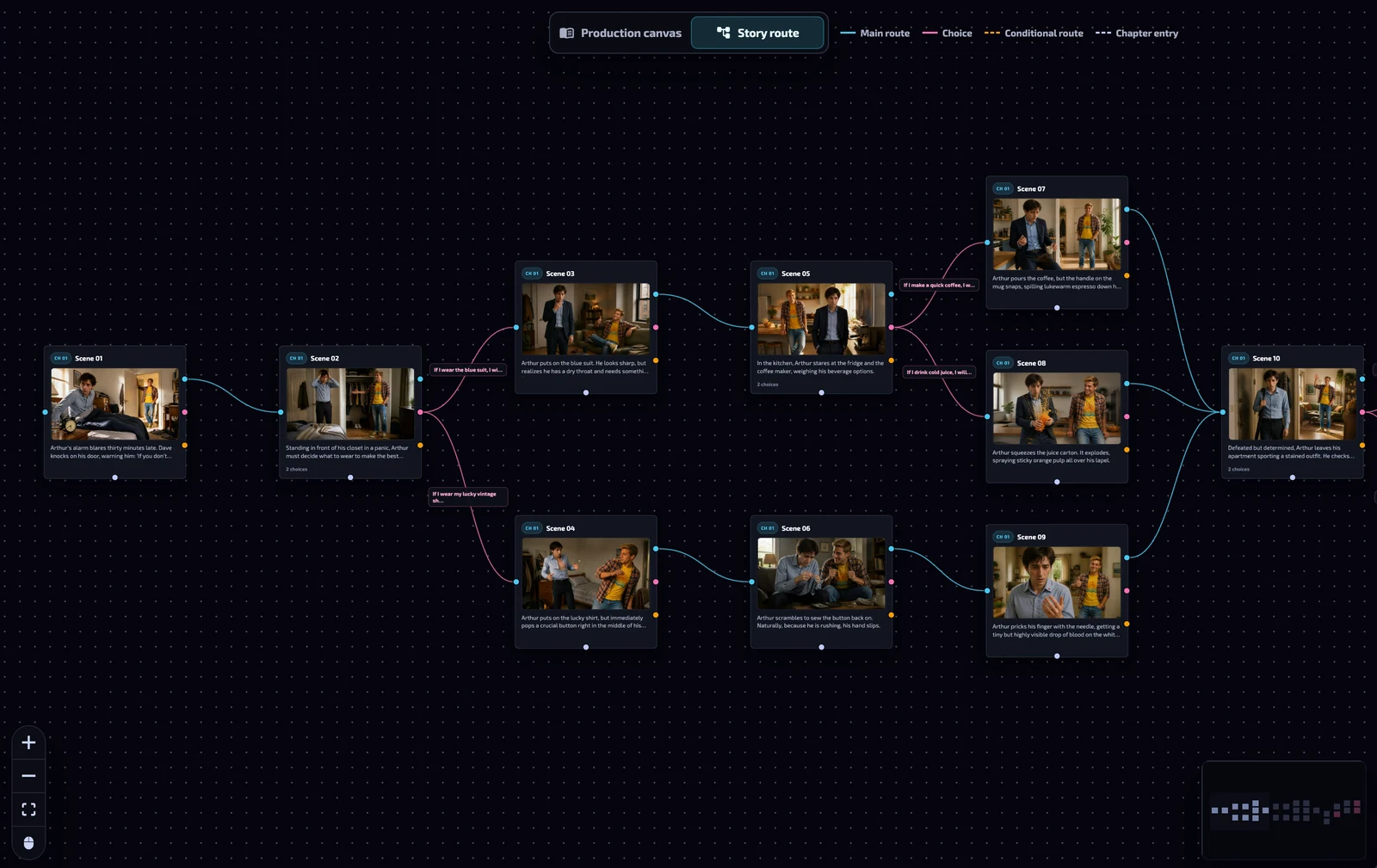
Turning an idea into an interactive story means coordinating characters, scenes, dialogue, and branching choices. Fast generation alone does not make that process manageable: creators need ways to steer, review, and revise the work.
My role
As the sole designer working directly with the founders, I shaped the product definition, MVP scope, creation flow, interaction patterns, prototypes, shipped UI, and design system.
Finding the right creator
The initial audience included writers who wanted to create without drawing or coding. Early paying-user observations shifted the focus toward professional creators who needed to deliver work. This was an early signal, rather than evidence about every writer’s motivation.
Control before, during, and after generation
Before generation, editable prompts help people specify intent. During creation, confirmation and revision keep decisions visible. After generation, manual editing, local regeneration, and structure management let creators refine individual parts without restarting the whole story.
Three interaction models, three tradeoffs
The first model used lists and explicit confirmation steps. It made the sequence understandable, but took too long to demonstrate value. A conversational canvas brought results forward, while making assets harder to locate as the workspace grew. The later model brought a navigator, chat, and canvas together to balance speed with structure.
What remains unresolved
Retention remains a challenge. People arriving to read stories and people arriving to create them represent different intentions, but appear together in the funnel. The next measurement question is how each group progresses, rather than treating overall user growth as proof of product–market fit.